

Acupuncture for Oncology
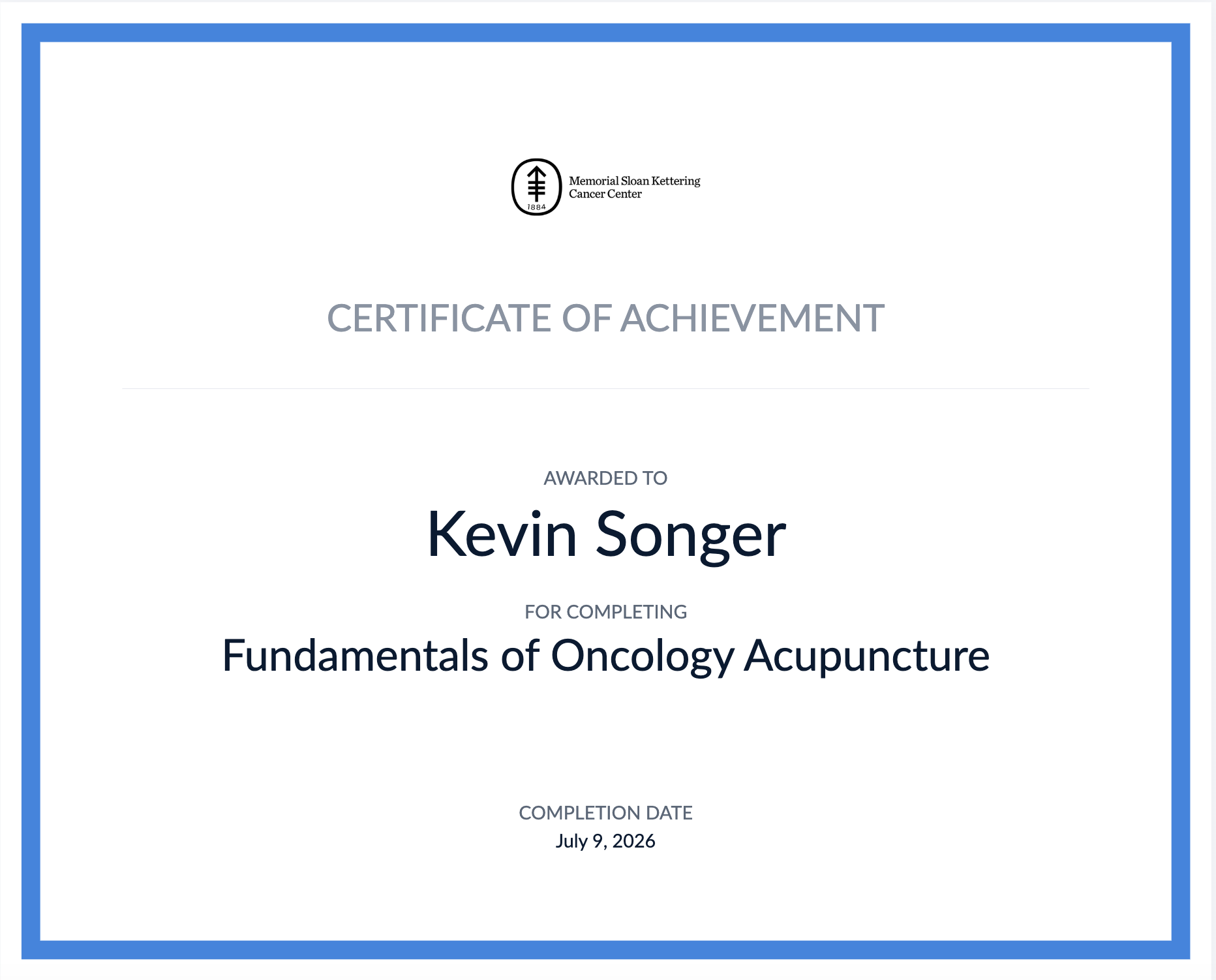
I recently completed a Memorial Sloan Kettering Cancer Center program for Oncology Acupuncture Fundamentals. Cancer is such a prevalent health pattern today in the world, especially in industrialized nations where chemical hormone disrupters and carcenogenic substances are found everywhere around us.
Acupuncture in Oncology: A Gentle Ally for Cancer Patients
Cancer treatment, whether chemotherapy, radiation, surgery, or hormone therapy, often brings a heavy burden of side effects. Many patients seek complementary therapies that can ease discomfort without adding more medications. Acupuncture has emerged as a well-studied and increasingly recommended supportive option in cancer care.
Why Acupuncture Supports Oncology Patients
Acupuncture does not treat or cure cancer itself, but it excels at managing symptoms and improving quality of life during and after treatment. Leading organizations recognize its value:
The National Cancer Institute (NCI) highlights strong evidence for relieving chemotherapy-induced nausea and vomiting, with additional benefits for pain, fatigue, hot flashes, and dry mouth.
NCCN Guidelines (National Comprehensive Cancer Network) recommend it for fatigue, hot flashes, neuropathic pain, arthralgias, myalgias, and nausea/vomiting.
Joint SIO-ASCO guidelines (Society for Integrative Oncology (SIO) and the American Society of Clinical Oncology (ASCO) endorse acupuncture for aromatase inhibitor-related joint pain and suggest it for general cancer or musculoskeletal pain.
Patients often turn to it because it offers a non-drug approach that can reduce reliance on pain medications or anti-nausea drugs, while addressing the emotional toll of cancer, such as anxiety and stress. Many report better sleep, more energy, and an overall sense of resilience.
How Acupuncture Works in This Context
Practitioners insert very thin, sterile needles at specific points on the body to stimulate nerves, muscles, and connective tissue. From a Western perspective, this triggers:
Release of endorphins and other natural painkillers.
Modulation of the nervous system to reduce inflammation and pain signals.
Improved blood flow and immune modulation.
Neurochemical changes (e.g., serotonin, dopamine) that ease nausea, anxiety, and fatigue.
In oncology settings, sessions are tailored—often called “oncology acupuncture”—with precautions for low blood counts, lymphedema risk areas, or post-surgical sites. Treatments are gentle, typically 20–45 minutes, and can be done alongside conventional care.
Key Benefits Backed by Evidence
Nausea and Vomiting: Strongest evidence here; acupuncture often outperforms or complements standard anti-emetics, including for anticipatory nausea.
Pain Relief: Effective for cancer-related pain, post-operative pain, chemotherapy-induced peripheral neuropathy (CIPN), and joint pain from hormone therapies. Studies show reduced pain scores and lower opioid use.
Fatigue and Sleep: Helps combat cancer-related fatigue and improves rest.
Hot Flashes and Other Symptoms: Reduces vasomotor symptoms in breast and prostate cancer patients; may ease dry mouth (xerostomia) and anxiety.
Research, including randomized trials and meta-analyses, consistently shows acupuncture is safe when performed by trained practitioners and can enhance overall well-being without significant side effects.
A Note on Integration
Acupuncture works best as part of a multidisciplinary team approach. Many major cancer centers (e.g., MD Anderson, Memorial Sloan Kettering) now offer it. Patients should seek licensed practitioners with oncology-specific training for safety and optimal results.
If you or a loved one is navigating cancer, acupuncture offers a time-tested, evidence-supported way to feel more comfortable and in control. Always discuss with your oncology team and they can guide integration into your personalized care plan.
Small needles, big support: sometimes the most powerful tools in healing are the gentlest.