

Jia Wei Xiao Yao San: TCM Support for Cancer Patients
Jia Wei Xiao Yao San: TCM Support for Cancer Patients
Jia Wei Xiao Yao San (also called Jia Wei XYS, Dan Zhi Xiao Yao San, or Augmented Free and Easy Wanderer) is a popular Traditional Chinese Medicine (TCM) formula. It gently supports emotional balance, reduces stress-related symptoms, and helps manage side effects during cancer treatment. Memorial Sloan Kettering Cancer Center (MSKCC) discusses it on its integrative medicine page, highlighting its common use—especially among breast cancer patients—for improving mood, reducing anxiety, fatigue, and treatment-related discomfort.
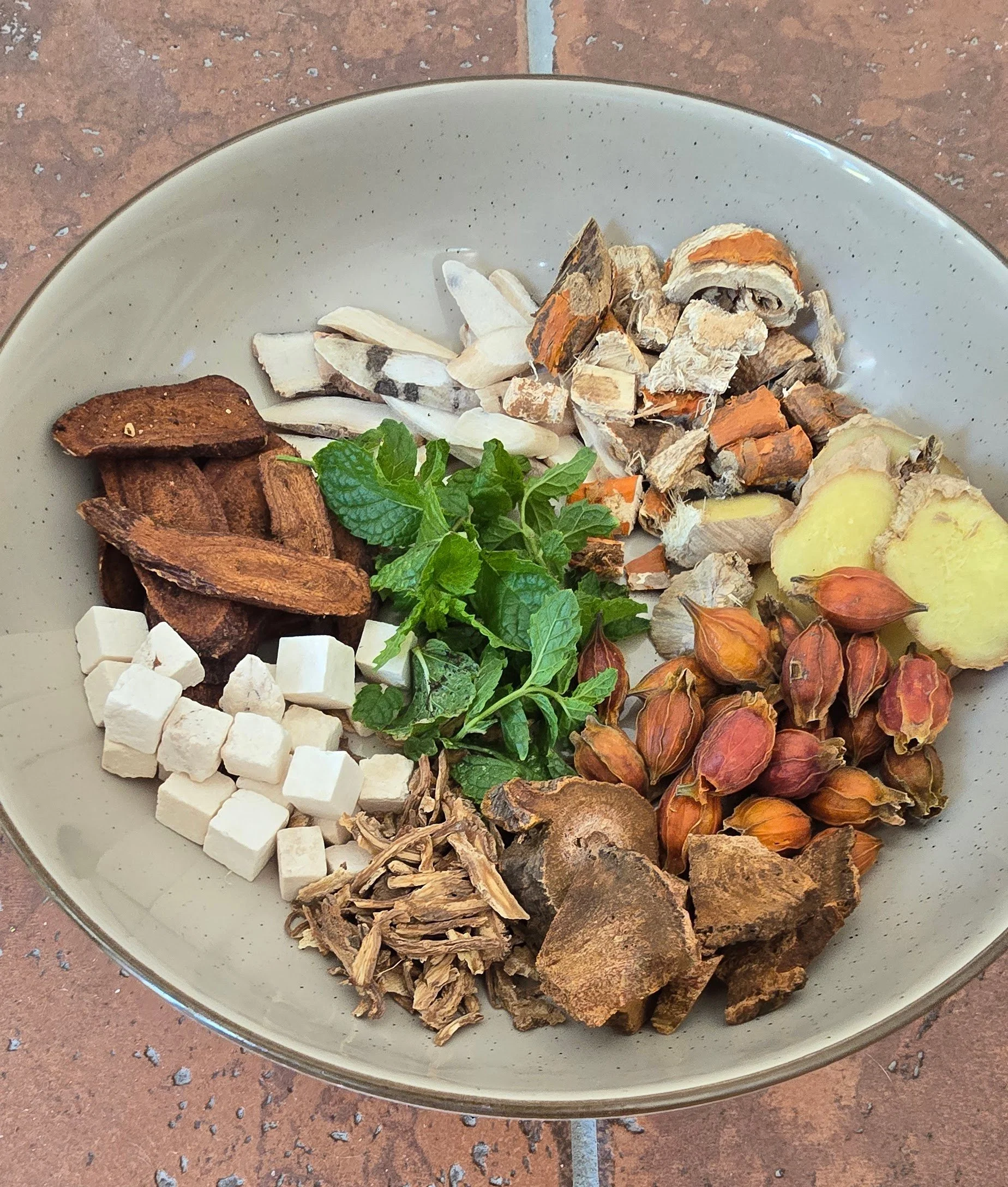
Historical Tidbits
The base formula, Xiao Yao San ("Free and Easy Wanderer" or Rambling Powder), originated in the Song Dynasty (around 1078–1085 AD) in the Tai Ping Hui Min He Ji Ju Fang, China's first government-sponsored pharmacopoeia compiled by the Imperial Medical Bureau. Its poetic name draws from the ancient philosopher Zhuangzi, evoking carefree, unobstructed movement. Physicians added the "Jia Wei" (augmented) modifications during the Ming Dynasty (in Nei Ke Zhai Yaoby Xue Ji) to address heat arising from prolonged Liver Qi stagnation. Today, it remains one of the most widely prescribed TCM formulas in East Asia for women's health and stress-related conditions.
Key Ingredients and Their Roles
Base Xiao Yao San herbs (8 core ingredients):
Chai Hu (Bupleurum root): Chief herb; spreads Liver Qi, relieves stagnation and emotional constraint.
Dang Gui (Chinese Angelica root): Nourishes and invigorates Blood, supports Liver function.
Bai Shao (White Peony root): Nourishes Liver Blood, softens the Liver, and calms irritability.
Bai Zhu (White Atractylodes rhizome): Strengthens Spleen Qi, aids digestion, and reduces dampness.
Fu Ling (Poria mushroom): Strengthens Spleen, drains dampness, and calms the spirit.
Sheng Jiang (Fresh Ginger): Warms the middle, harmonizes the stomach, and supports digestion.
Bo He (Mint): Disperses Liver Qi and clears mild heat.
Gan Cao (Licorice root, often honey-fried): Harmonizes the formula and tonifies Spleen Qi.
Modified (Jia Wei) additions (cooling herbs):
Mu Dan Pi (Tree Peony root bark): Clears heat from the Blood and Liver, cools without damaging Yin.
Zhi Zi (Gardenia fruit): Clears Heart and Liver heat, drains damp-heat, and calms restlessness.
Overall actions: Spreads Liver Qi, nourishes Blood, strengthens the Spleen, and clears deficiency heat, ideal for patterns of stress, irritability, and mild heat signs common in cancer care.
Use in Cancer Treatment Support
Jia Wei XYS is frequently used by breast cancer patients on tamoxifen and may help reduce side effects like mood swings, fatigue, insomnia, and nausea when combined with chemotherapy. Some studies link it to improved quality of life, better short-term treatment efficacy, and potential survival benefits in certain cancers such as cervical, though evidence is mostly from observational data and needs more high-quality trials. It primarily serves as supportive care for psychological and menopausal-like symptoms.
Contraindications and When Not to Use
Hormone-sensitive cancers such as certain breast cancers: Dang Gui and licorice have mild estrogenic properties. Patients shall always discuss risks/benefits with their Oncologist.
Avoid or use with caution if you have strong cold/deficiency patterns without heat signs (the cooling additions may be too cold).
Possible mild side effects include headache, dizziness, fatigue, or loose stools.
Herb-drug interactions: May affect drugs like Paclitaxel, 5-FU, or Tamoxifen so professional MD Oncology professional supervision is essential.
Not a substitute for conventional cancer treatment. Always consult your healthcare team before use.
Jia Wei Xiao Yao San offers a time-tested, holistic approach to easing the emotional and physical toll of cancer journeys. As peer reviewed studies show, it shines in supportive, integrative settings when used thoughtfully. Speak with a qualified TCM practitioner and your oncology team to determine if it’s appropriate for you.
This post is for educational purposes only and not medical advice.