

Three Cold Herbs for Cancer Symptom Treatment
The Three Huangs—Huang Qin, Huang Bai, and Huang Lian—play a key supportive role in Traditional Chinese Medicine (TCM) formulas aimed at easing certain cancer-related symptoms by clearing heat, drying dampness, and resolving toxicity.
In TCM theory, many cancer-related discomforts (such as feverish sensations, inflammatory responses, digestive upset with heat signs, infections secondary to treatment, skin issues, or feelings of internal “toxicity”) are often framed as excess Heat, Damp-Heat, or Fire-Toxin patterns. The “Three Huangs” (San Huang) are classic bitter, cold herbs that address these patterns across the body’s upper, middle, and lower regions.
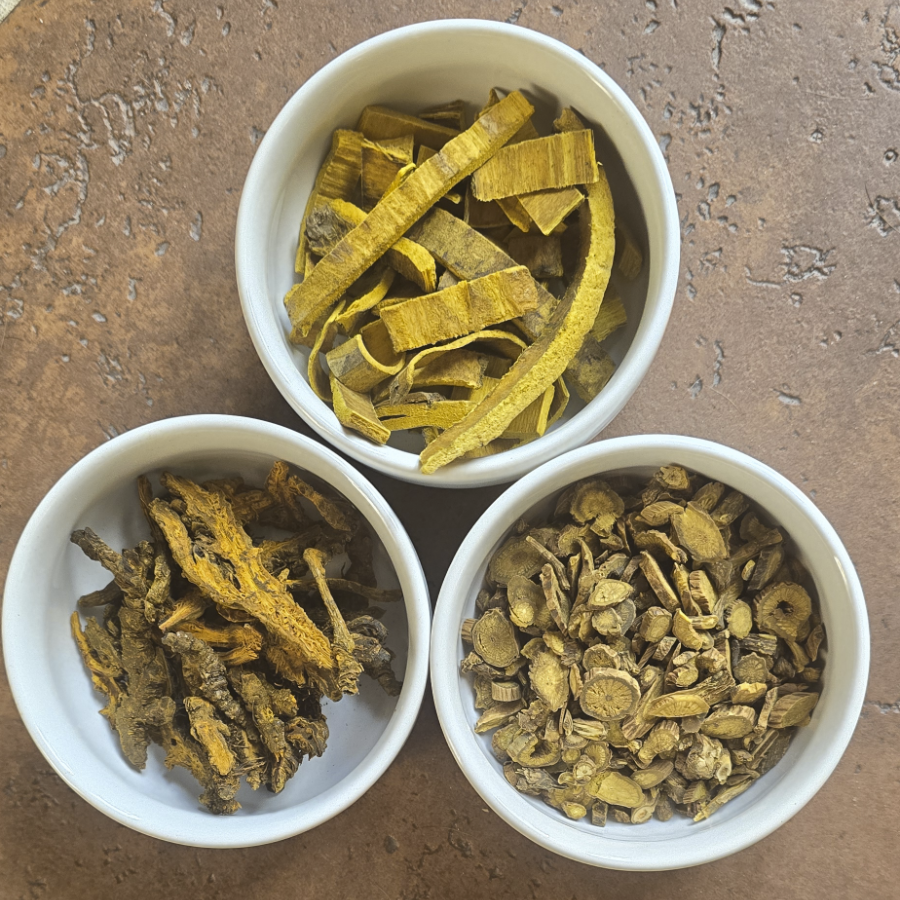
Huang Qin (Scutellaria baicalensis / Baical skullcap root) primarily targets the upper and middle areas. It clears heat and dries dampness, cools the blood, and helps with heat in the Lungs or Stomach—useful for symptoms like fever, irritability, yellow phlegm, or certain digestive inflammations.
Huang Lian (Coptis chinensis / Chinese goldthread rhizome) strongly clears heat and dries dampness, especially in the middle burner (digestive system). It is valued for resolving toxicity and is traditionally used for intense heat signs such as high fever, restlessness, or damp-heat diarrhea.
Huang Bai (Phellodendron bark / Amur cork-tree bark) focuses more on the lower burner. It clears damp-heat, drains deficient (empty) fire, and helps with toxicity manifesting as lower-body heat signs, night sweats, or damp skin lesions.
These three herbs frequently appear together (often with Gardenia/Zhi Zi) in classical formulas such as Huang Lian Jie Du Tang (Coptis Decoction to Resolve Toxicity). This formula is designed to drain fire and resolve toxicity from all three burners when heat is intense and systemic. In modern TCM practice supporting oncology patients, such heat-clearing approaches may be considered for managing treatment-related side effects involving inflammation, fever, or toxin-like symptoms, always tailored to the individual’s pattern diagnosis.
Modern research has explored the anti-inflammatory, antimicrobial, and other bioactive properties of these herbs (including compounds such as baicalin and berberine) and examined formulas containing them in laboratory and some clinical contexts related to inflammation and supportive care. However, TCM views them as tools for pattern differentiation rather than direct anti-cancer agents.
Important note: These herbs and formulas are not a cure or standalone treatment for cancer. Any use should occur under the guidance of a qualified TCM practitioner working in coordination with conventional oncology care, as individual constitution, concurrent medications, and specific symptoms must be carefully assessed. Bitter-cold herbs can damage Spleen yang or digestion if used inappropriately or long-term.
The enduring value of the Three Huangs lies in their precise, time-tested ability to cool excess heat and clear damp-toxicity—offering a traditional framework for comfort and balance amid the challenges of cancer-related symptoms.